



23 Mar Are Bernedoodles Easy to Train?
Bernedoodle training is generally easier than with many breeds thanks to their high intelligence, eagerness to please, and strong connection with their owners.
The Bernedoodle is often described as the “best of both worlds,” blending the loyal temperament of the Bernese Mountain Dog with the elite athleticism and brainpower of the Poodle. But does that high IQ translate to an easy time in the training ring? For most owners, the answer is a resounding yes—provided you understand their behavior and personality.
For an adult Bernedoodle, you can expect a focused partner that requires about 15–20 minutes of daily dedicated training to stay sharp and well-behaved.

Bernedoodle Training: Table of Contents
- Poodle vs Bernese Side
- How to Train the Bernedoodle
- What Kind of Motivation Works Best?
- Our #1 Tip for Bernedoodle Training
- The Puppy Phase
- Potty Training Tips
- Crate Training Tips
- Leash, Collar, & Harness Recommendations
- Bernedoodle Puppy Socialization
- #1 Tip for Introducing a Puppy to a New Person
- Chew Toy Recommendations
- Training a Puppy Into Adulthood
Poodle vs Bernese Side (& How that Impacts Training)
One thing we occasionally see from the Bernese side is that some puppies can be a little more reserved initially in new situations or around new people. We don’t really like using the word “stubborn,” because Bernedoodles are such a blend and most are very intelligent and eager to connect with their people.
In our experience, the Poodle side often brings more of that immediate “people-pleasing” personality, while the Bernese side can sometimes be a little more observant at first — almost wanting to take things in before fully engaging. Once they warm up, though, they tend to become incredibly affectionate, loyal, and connected companions.
How to Train the Bernedoodle
Bernedoodles thrive on structure and “jobs,” and they also enjoy plenty of exercise and mental stimulation. Because they are a working-breed cross, they need to feel like they are contributing to the pack.
Whether you are training a puppy or an adult, you will need to focus on consistency and engagement. The Bernedoodle doesn’t just follows commands – he or she is an intelligent thinker. In fact, an adult Bernedoodle can master complex tasks, from advanced off-leash recall to helpfully picking up dropped items. At this stage, training should be a mix of refining manners and introducing “brain games” that challenge their cognitive abilities.
- Intelligence: Bernedoodles are among the smartest of doodles and can learn a new command in as few as 5-10 repetitions.
- Food Motivation: Bernedoodles tend to be driven by treats, making "marking" good behavior easy. They like to work hard to earn their piece of kibble or bit of chicken.

What kind of motivation works best? food, praise, or both?
Every Bernedoodle puppy is a little different, and we’ve found it’s less about separating the “Poodle side” from the “Bernese side” and more about the individual puppy’s personality. The majority of our puppies are definitely food motivated, especially when it’s a treat they really love, which makes training easier in the early stages. At the same time, Bernedoodles are also very affection-driven dogs.
Praise, connection, and positive interaction matter a lot to them. In our experience here at Happily Ever After Doodles, it’s really not an either/or situation — most respond well to both. Occasionally you’ll have one puppy that is slightly more food motivated and another that is more relationship-driven, but consistency is ultimately the biggest factor in successful training regardless of the reward style.
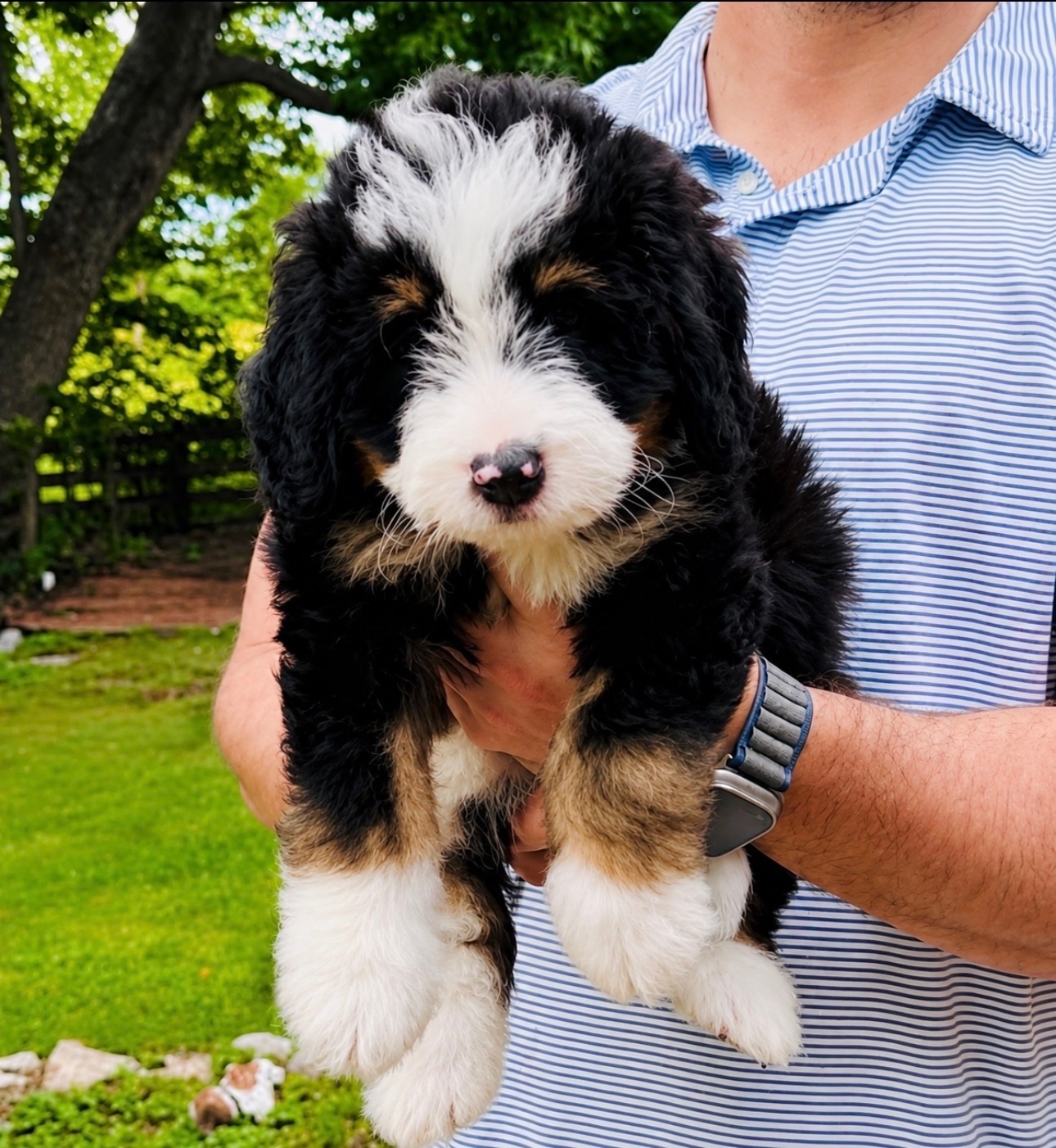
Our #1 Tip for Bernedoodle Training
“If I had one tip for training a Bernedoodle puppy, it would be this: focus on routine and consistency in a way that actually fits your real life. Bernedoodles are incredibly impressionable and adaptable, especially as young puppies.
A lot of people think they need to completely rearrange their lives around the puppy forever, but in reality, healthy training is about helping the puppy gradually adapt to the rhythm of your home and lifestyle. Of course, there’s an adjustment period in the beginning where you’re helping them feel safe and comfortable, but over time, the goal is creating consistency they can rely on.
For example, if you’re naturally an early riser, your puppy will learn that rhythm. If your household moves a little slower in the mornings, they can adapt to that too when it’s done consistently. Puppies thrive when expectations are clear and predictable.
A happy, engaged owner who enjoys the process will almost always raise a more confident and well-adjusted dog.” – Andrew
The Puppy Phase: Foundations for Success
Training a Bernedoodle puppy is all about setting the “rules of the house” early.
Because they grow quickly—especially the Standards—teaching them manners while they are small is much easier than correcting a 70-pound jumper later.
- Potty Training: Bernedoodles generally pick this up quickly. A strict schedule is your best friend.
- Crate Training: Essential for safety and housebreaking. Make the crate a "positive den" with special bedding and toys.
- Leash Training: Start in the hallway or backyard. Bernedoodles can be strong pullers, so teaching "loose leash walking" early prevents shoulder strain for you later!
Important Note: A Bernedoodle that is scolded too harshly may “shut down,” becoming fearful or refusing to interact. Always use positive reinforcement to keep their confidence high.

Potty Training Tips for New Owners
The #1 potty training tip we give new Bernedoodle owners is simple: create a consistent routine and stick to it. Puppies are constantly learning, and their little brains are always making associations. The more predictable and consistent their schedule is, the faster they typically understand what’s expected of them.
My advice: Regular potty breaks, consistent feeding times, and repeated routines throughout the day help puppies adjust much more quickly. Bernedoodles are very adaptable dogs, so when owners stay consistent, most puppies begin settling into the rhythm of the home surprisingly well.
What’s the most common sign a puppy is about to have an accident?
One of the best things owners can do early on is learn to recognize those subtle cues quickly. The faster you respond and bring them outside, the easier and smoother potty training usually becomes. The most common sign we see before a Bernedoodle puppy has an accident is sudden sniffing behavior.
When puppies start intensely sniffing the ground, pacing slightly, or circling an area, that’s usually the clearest indicator they’re looking for a place to go to the bathroom. And even if you miss that moment, it’s okay—give yourself grace. If you don’t catch the signs in time and your puppy has an accident, that’s okay too.
Calmly take them outside immediately afterward anyway, because we want them to begin associating going potty with being outside.

Crate Training Tips to Know
We’re very big believers in crate training, especially during the first few nights home, because that transition period is often the biggest adjustment a puppy has ever experienced. Up until that point, they’ve been surrounded by littermates, warmth, and constant companionship, so suddenly being alone in a crate can feel unfamiliar at first.
Where do you recommend owners place the crate for the first week?
I typically recommend keeping the crate in the bedroom during the first several nights, especially if the puppy seems anxious or unsettled. The goal is to help the puppy understand that the crate is a safe, comforting space and not a punishment.
We encourage families to make the crate cozy with soft bedding, a blanket over part of the crate, calming background noise like ocean sounds or white noise, and especially a heartbeat stuffed animal, which can help mimic the comfort of littermates sleeping nearby.
A Note on Your Puppy's Adjustment
One important part of successful crate training is preparing puppies well before bedtime. We usually recommend no food or water within about three hours of bedtime during those early weeks, while also making sure they’ve had several opportunities to go potty before settling down for the night. That way, if the puppy cries, owners can feel more confident knowing it’s likely adjustment-related rather than an urgent potty need.
We also encourage owners not to panic at every cry immediately. If the puppy has recently gone potty and their needs have been met, giving them a few minutes to settle and self-soothe is often healthy and helpful. Sometimes puppies simply need reassurance that they’re safe and not alone.
Once the puppy becomes more confident and adjusted, owners can gradually move the crate farther away over time if they don’t plan to keep it in the bedroom long term. In our experience, helping puppies feel secure first usually creates a smoother and more successful crate training experience overall.
What item should I put in the crate to help a new puppy settle in?
A heartbeat stuffed animal is the number one item we recommend for helping a new puppy settle into their crate during those first nights home. Since puppies are used to sleeping closely with their littermates, the heartbeat feature can help mimic that comfort and companionship during the adjustment period.
Outside of that, we also recommend a comfortable bed or soft blanket to help the crate feel safe, calming, and inviting rather than unfamiliar or stressful.
Leash, Collar, & Harness Recommendations
While we don’t necessarily swear by one specific collar or harness brand, we do strongly recommend having both available during the early stages. Puppies are learning everything for the first time when they come home, including leash training, so it’s important to remember they’ve never actually walked on a leash during their first several weeks of life.
For basic leash training around the house or yard, a simple collar can work perfectly fine. The biggest thing is keeping the puppy engaged, walking slowly with them, and understanding that leash training takes patience and repetition in the beginning. That said, we personally like using harnesses for walks in public spaces or unfamiliar environments.
A harness gives a little more control and security, especially in situations where there may be larger dogs, distractions, or busy surroundings. It also makes it easier to safely guide or quickly move a puppy if needed while they’re still learning confidence and leash manners.
Bernedoodle Puppy Socialization
If there is one “must-do” for Bernedoodle training, it is early socialization. Because the Bernese Mountain Dog can sometimes be wary of strangers, exposing your Bernedoodle to a wide variety of people, dogs, sounds, and environments before the age of 16 weeks is vital.
A well-socialized Bernedoodle is confident, friendly, and adaptable. Without this, they may develop “stranger danger” or become overly shy in new situations.
"Puppy Parties"
Socialization is something we put a huge emphasis on from an early age.
One of our favorite things to do is host “puppy parties,” where the puppies get interaction with both adults and children of different ages. For these “puppy parties,” we have children and pre-teens spend time holding, playing with, and interacting with the puppies.
At Happily Ever After Doodles, we want our puppies to become comfortable with different people, energy levels, voices, and handling styles.
Car Rides & Real-World Exposure
We’re also big believers in car rides and real-world exposure. Many Bernedoodle families love bringing their dogs along to activities, sporting events, errands, or family outings, so we want our puppies comfortable traveling and experiencing new environments early on.
We also work on introducing them to crates, different surfaces, and new environments so unfamiliar experiences don’t feel overwhelming later.

Noise Desensitization
Noise desensitization is another important part of our process. Our puppies are exposed to household sounds, larger dogs barking, white noise, music, and calming sounds like ocean noise during rest times.
As the puppies grow, we’ll often take a few at a time into public settings so they can experience new sights, sounds, smells, and positive interactions with strangers. The goal is to help build confidence, adaptability, and comfort in a variety of everyday situations before they ever head to their forever homes.

#1 tip for Introducing a Puppy to a New Person
“My biggest tip when introducing a puppy to a new person is simple: read the puppy and adjust to their comfort level instead of forcing the interaction.
Every Bernedoodle puppy is different. Some immediately run toward new people with excitement, while others naturally take a few moments to observe and warm up first. When we introduce puppies
to new people, we pay close attention to both the puppy’s energy and the person’s energy. If a puppy seems more hesitant or shy, we usually hold them first and allow the new person to gently pet them while they still feel safe and secure.
As the puppy begins relaxing — usually you’ll notice tail wagging or more curiosity — we slowly allow more interaction at their pace. At the same time, if a puppy is outgoing and eager to engage, we allow that excitement in a safe and positive way as long as the person feels comfortable too.
I also always give puppies space to sniff and investigate naturally, because that’s one of the primary ways they learn to trust new people and environments.” – Andrew
Chew Toy Recommendations
We’ve seen really good success with durable chew toys like KONG toys, especially during the teething stage. Puppies are going to chew — there’s really no getting around that — so one of the best things owners can do is give them appropriate, safe outlets for it early on. KONG toys are great because they help occupy puppies mentally while also giving them something soothing to chew during teething. Soft toys like Lamb Chop are also favorites for comfort and play, although they usually don’t last as long as tougher chew toys.
One of the biggest benefits of having designated chew toys available is that it helps redirect puppies away from chewing on shoes, furniture, or random household items. Especially during those first several weeks and months home, giving puppies something they’re allowed to chew on makes a huge difference for both the puppy and the owner.
Training a Puppy into Adulthood
One of the biggest things we encourage owners to remember is that training doesn’t stop once your Bernedoodle starts “getting it.” Most puppies learn routines surprisingly quickly when owners are consistent, but just like raising children, those lessons and boundaries need continued reinforcement as they grow and mature. During the first year especially, puppies go through a lot of developmental stages very quickly.
In the beginning, they’re almost like toddlers, and then suddenly they’re bigger, more confident, more curious, and entering new phases of maturity and independence. As they grow, owners often need to revisit and reinforce the same expectations and boundaries in new ways.
Consistency is Key
We always encourage families to continue working with their dog consistently instead of assuming training is permanently finished after the first few successful months.
Keep reinforcing routines, communication, boundaries, and positive behaviors as they mature. One philosophy we strongly believe in is that freedom should be earned progressively over time. Rather than giving a young dog unlimited freedom immediately, it’s usually healthier to slowly expand their freedom as they consistently demonstrate good behavior, reliability, and trustworthiness.
Why We Love the Bernedoodle's Personality
One of the things we love most about Bernedoodles is that they tend to have a really unique “both-and” personality. They’re playful and fun when it’s time to engage, but they also have the ability to settle down and simply enjoy being near their people. And honestly, we see those calmer traits begin showing up much earlier than full adulthood.
Of course, like any dog, maturity continues developing over time, and most dogs don’t fully leave the puppy stage until closer to two years old. But that doesn’t mean families have to wait two years for a calm, enjoyable companion.
Many Bernedoodles naturally begin showing adaptable and relaxed behavior much earlier, especially when they’re raised in a consistent environment. One thing we’ve noticed is that Bernedoodles tend to adapt very closely to the rhythm of their family.
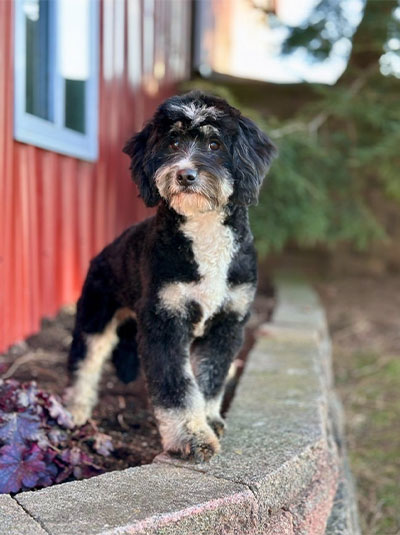
One of our Mini Bernedoodle dads, Nash!
Senior Bernedoodle training is less about high-intensity drills and more about mental maintenance. As they age, keeping their brain active can actually help slow cognitive decline. Focus on low-impact tricks (like “shake” or “touch”) and scent-based games that allow them to use their nose without straining their joints.

Finding Your Perfect Match!
Training your Bernedoodle companion is a journey, and it’s much easier when you start with a puppy that has a sound temperament and a great genetic foundation.
At Happily Ever After Doodles, we specialize in breeding healthy, happy Bernedoodles who are genetic and health-tested for a long and happy life. A well-socialized Bernedoodle is confident, friendly, and adaptable and the perfect family pet.
Our breeders are here to help match you to your new best friend and provide the support you need to start your training journey on the right paw.